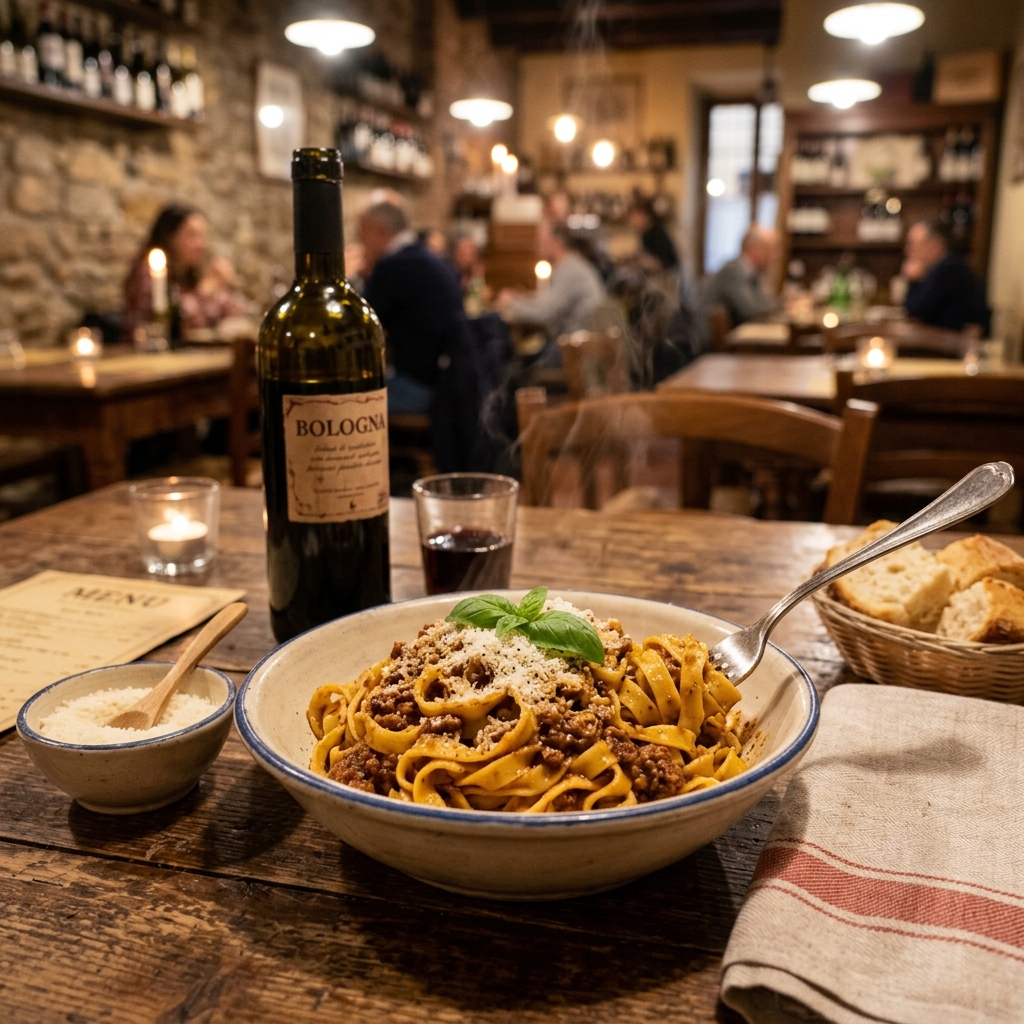
Bologna does not brag about its food. It does not need to. The city that gave the world ragù, mortadella, tortellini, and tagliatelle has been feeding people extraordinarily well since the medieval university was founded in 1088. The students who arrived then, as now, ate very well.
The Italians have a nickname for it: La Grassa, the fat one. They also call it La Dotta (the learned) and La Rossa (the red, for its terracotta porticoes and communist political history). La Grassa is the one that matters here.
Why Bologna and Not Florence or Rome
Florence has better Renaissance art. Rome has better ancient ruins. Bologna has better food than either, and it knows this without making a performance of it.
The practical reason: Emilia-Romagna is Italy’s agricultural heartland. The Po Valley — flat, fertile, and fog-prone in winter — produces some of the finest ingredients in Europe. Parmigiano-Reggiano comes from the pastures between Parma and Reggio Emilia. Prosciutto di Parma is cured in the hills south of Parma at specific altitude and humidity. Modena produces both Lambrusco wine and traditional balsamic vinegar aged 12–25 years in wooden barrels. All of this sits within 50km of Bologna Centrale.
The cultural reason: Bologna’s food culture is domestic and civic, not performative. The best food here is in trattorias that have been serving the same dishes from the same families for three or four generations, and in the Quadrilatero market district where shopkeepers have been selecting the same products for just as long.
The Quadrilatero: Bologna’s Medieval Food Market
The Quadrilatero is the grid of medieval streets behind Piazza Maggiore — Via Drapperie, Via Pescherie Vecchie, Via degli Orefici — that has functioned as Bologna’s food market since at least the 13th century.
Tamburini (Via Caprarie 1, established 1932) is the anchor: a combination delicatessen, standing bar, and institution. Mortadella is sliced to order from enormous cylinders behind the counter; the tortellini are made fresh daily; Parmigiano wheels are cracked open rather than cut. Stand at the bar with a glass of Pignoletto (the local Emilian white wine) and eat mortadella. This is the correct breakfast in Bologna.
Paolo Atti and Figli (Via Caprarie 7, established 1880) is the pasta shop. Fresh tagliatelle, tortellini, tortelloni, and lasagne verde — all made by hand. The shop has been in continuous operation for nearly 150 years. Watch the sfogline (pasta-makers) at work through the window.
La Baita (Via Pescherie Vecchie 3) is the cheese shop. Parmigiano-Reggiano at multiple ages: 24 months (young, slightly grainy, good for cooking), 36 months (crystalline, intense, for eating). Ask to taste before buying.
Mercato di Mezzo (Via Clavature 12) is a more recent covered market (opened 2014) with specialty food stalls, a wine bar, and quick lunch options.
The Quadrilatero is at its best Tuesday through Saturday mornings, when every stall is open and local shoppers arrive before tourists. Go before 10am.
What to Eat and Where
Ragù
Real Bolognese ragù takes 3–4 hours to make properly. The recipe registered with the Bologna Chamber of Commerce in 1982 specifies: beef (coarse grind), pancetta, onion, carrot, celery, tomato paste (not sauce), dry white wine, and whole milk. No garlic. Served with tagliatelle al ragù — flat egg pasta cut to exactly 8mm width when cooked.
Where to eat it: Trattoria Anna Maria (Via Belle Arti 17) — book in advance. The owner, Anna Maria Monari, has been running this trattoria since 1985. The ragù is the benchmark. Alternatively, Trattoria Bertozzi (Via Andrea Costa 84) for a more neighborhood version. Do not order it with spaghetti.
Tortellini in Brodo
Tortellini — ring-shaped pasta filled with a mixture of pork loin, prosciutto, mortadella, Parmigiano, and egg — is served in brodo: a clear, rich capon or beef broth. The pasta floats in the bowl; you eat it with a spoon.
Where to eat it: Da Cesari (Via de’ Carbonesi 8) — an institution since 1955, still family-run. Order the tortellini in brodo and the cotoletta alla bolognese (veal cutlet with ham and melted Parmigiano). Book ahead.
Avoid tortellini with cream sauce. It exists but is considered a concession to tourist taste in the city’s serious restaurants.
Mortadella
Mortadella is not bologna, the American deli meat named after it. The real thing — protected by IGP designation since 1998 — is made from finely ground pork, pork fat cubes, black pepper, and sometimes pistachios. Eat it thinly sliced at Tamburini’s counter with a small glass of Lambrusco.
Gelato
Stefino (Via Galliera 49b) — ask any Bolognese where to get gelato and this is the answer. The cremino (chocolate and hazelnut) and crema are the signatures.
The Meal Structure
In Bologna’s trattorias, dinner runs: antipasto (optional), primo (pasta — not optional), secondo (meat or fish), contorno (side vegetable), dolce. Order the pasta.
Day Trips: Parma and Modena
Parma (25 Minutes by Train)
Parma is a dignified, prosperous city with an outsized food identity. Prosciutto di Parma and Parmigiano-Reggiano are its primary exports, but the city itself rewards a full day.
Prosciutto di Parma: Cured in the hills south of the city at controlled altitude and humidity for a minimum of 12 months (better ones take 18–24). The Prosciutto di Parma Consortium runs producer tours — book through their website.
Parmigiano-Reggiano: Factory visits to Consorzio-affiliated producers can be arranged through the Consorzio website. You watch the cheese-making process and eat broken pieces of Parmigiano at various ages with local honey and walnuts. This is genuinely one of the best food experiences available in Italy.
The city itself: The Battistero is a Romanesque-Gothic monument of extraordinary refinement. The Farnese Theatre, built inside Palazzo della Pilotta in 1618, is constructed entirely of wood and is astonishingly beautiful.
Modena (20 Minutes by Train)
Modena is Giuseppe Verdi’s birthplace, Enzo Ferrari’s hometown, and the city where Massimo Bottura’s Osteria Francescana has held three Michelin stars for over a decade.
Traditional balsamic vinegar: Aceto Balsamico Tradizionale di Modena DOP is aged in wooden barrels for a minimum of 12 years (25 for extravecchio), reducing to a thick, intensely sweet-sour condiment used a few drops at a time on Parmigiano, grilled meat, or strawberries. Acetaia Giusti (established 1605, the oldest balsamic producer in the world) offers tours and tastings.
Osteria Francescana: Getting a table requires booking months in advance and spending €350 or more per person. Modena’s mercato coperto and the trattorias around Piazza Grande offer extraordinary food at more accessible prices.
Lambrusco: The real thing — dry or off-dry, sparkling, red, consumed locally at lunch — is nothing like the sweet version exported in earlier decades. Order it by the glass at any Modena trattoria.
Getting to Bologna
Bologna Centrale station sits at the crossing of Italy’s north-south and east-west high-speed lines:
- Florence: 37 minutes, Frecciarossa, €20–30
- Rome: 2 hours, Frecciarossa, €40–60
- Milan: 1 hour, Frecciarossa, €25–45
- Venice: 1h30m, Frecciarossa, €20–40
This positioning makes Bologna an excellent base for an Emilia-Romagna week. Ferrara (40 minutes — arguably Italy’s most undervisited Renaissance city) is another excellent day trip.
When to Go
October–November: Peak food season. White truffle season runs October through early December; temperatures are comfortable (10–16°C).
March–May: Excellent shoulder season. Spring light in the porticoed streets is beautiful; asparagus and fresh vegetables appear on menus.
July–August: Hot and humid (30–35°C). Many Bolognese restaurants close for August holidays.
December–February: Cold and foggy. Trattorias are warm; menus shift to bollito misto (mixed boiled meats with salsa verde, mostarda, and horseradish) and heavier braises.
Practical Notes
Porticoes: Bologna’s historic center is covered by 38km of arcaded porticoes, a UNESCO World Heritage Site since 2021. You can walk almost anywhere in the center without an umbrella.
The university: The University of Bologna (founded 1088, the oldest in the world) keeps the city young and lively year-round.
Reservations: Book Trattoria Anna Maria and Da Cesari at least a week ahead for weekends.
Budget: A full sit-down trattoria lunch (primo, secondo, wine, water) costs €25–40 per person. Standing at Tamburini’s bar costs €8–12. Gelato at Stefino costs €2.50.
Bologna is Italy for people who find Rome overwhelming and Florence overrun. It is a city that takes its food as seriously as any city in the world takes anything, and it has been doing so for a very long time.
For more Italian train travel, see our Italy by train guide. For slow travel in Rome, see our Rome slow travel guide and best food cities in Europe.